
Publications

Patents
UI

Vegobears
HEURISTIC EVALUATION & UI REDESIGN
This work explores how strategic marketing and design can improve user engagement, visual appeal, and product discovery through thoughtful UI and content structure. Using AI-generated imagery, the experience was redesigned to enhance product visibility, messaging clarity, and conversion across desktop and mobile.
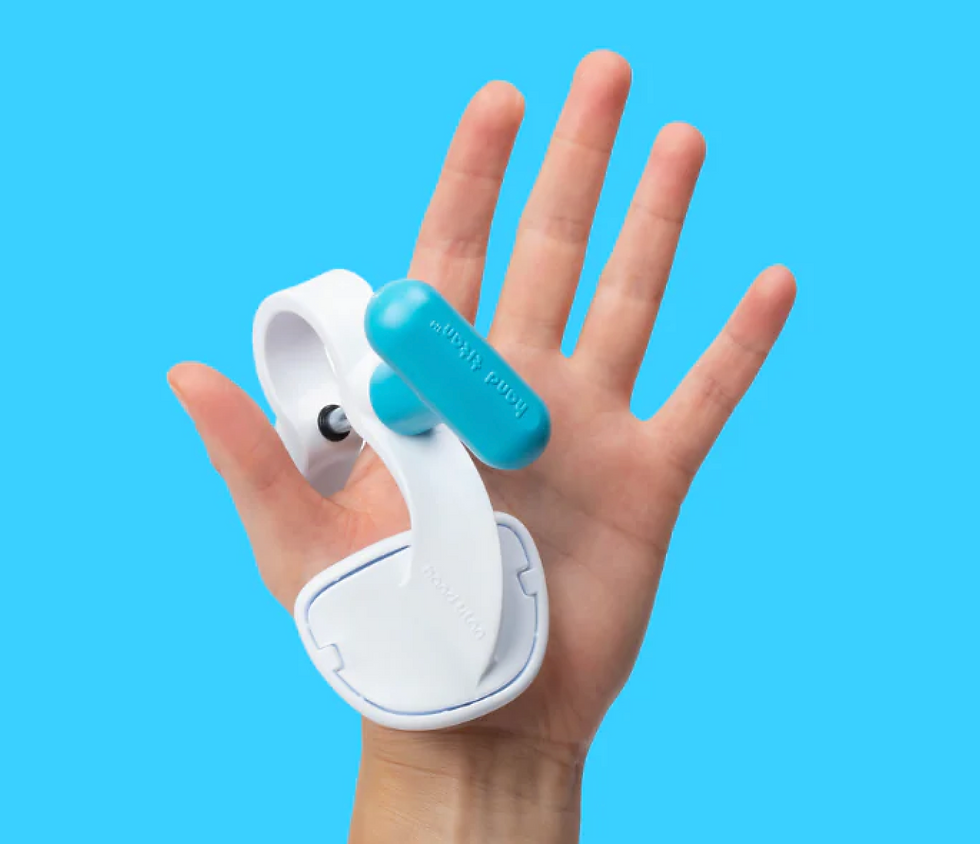
Hand Titan
HEURISTIC EVALUATION & UI REDESIGN
This work focuses on improving UX through refined UI and content structure, creating a more engaging experience that encourages product exploration and purchase. The redesign enhances information flow, content organization, visual appeal, and layout while preserving existing content.
Publications
Data-Driven Driver Model for Speed Advisory Systems in Partially Automated Vehicles
Olivia Jacome, Shobhit Gupta, Stephanie Stockar, Marcello Canova
Modeling, Estimation and Controls Conference
Assessment of Driving Simulators for Use in Longitudinal Vehicle Dynamics Evaluation
Rubanraj Sekar, Olivia Jacome, Jeffrey Chrstos, and Stephanie Stockar Ohio State University
SAE International
An Investigation of a Human in The loop with Eco-Driving ADAS
Olivia Jacome - Thesis
The Ohio State University
Patents


About
I work at the intersection of product strategy, UX research, engineering, and intelligent systems, bringing a multidisciplinary perspective to complex product problems.
My work focuses on helping people understand, interact with, and make decisions around increasingly autonomous technology—from human–robot interaction research to designing interfaces for autonomous trucks operating in real-world environments. I combine research, interaction design, and technical understanding to translate complex system behaviors, constraints, and uncertainty into products that are intuitive, functional, technically feasible, and rewarding to use.
My background in mechanical engineering, controls, design, and human–robot interaction (HRI) allows me to bridge engineering and design throughout the product development process. I’m particularly interested in products where technology is powerful or increasingly autonomous, but people still need to understand how it works, what it is doing, and when they need to act—while creating experiences that are not only effective, but engaging and enjoyable to use.
MS, BS Mechanical Engineering
BS Design Innovation & Society

Olivia Jacome
Olivia Jacome
UX Researcher, Product Designer, & Strategist
Designing intelligent products and human interactions for complex systems.

CASE
STUDIES
Research Process
About
I work at the intersection of product strategy, UX research, engineering, and intelligent systems, bringing a multidisciplinary perspective to complex product problems.
My work focuses on helping people understand, interact with, and make decisions around increasingly autonomous technology—from human–robot interaction research to designing interfaces for autonomous trucks operating in real-world environments. I combine research, interaction design, and technical understanding to translate complex system behaviors, constraints, and uncertainty into products that are intuitive, functional, technically feasible, and rewarding to use.
My background in mechanical engineering, controls, design, and human–robot interaction (HRI) allows me to bridge engineering and design throughout the product development process. I’m particularly interested in products where technology is powerful or increasingly autonomous, but people still need to understand how it works, what it is doing, and when they need to act—while creating experiences that are not only effective, but engaging and enjoyable to use.
MS, BS Mechanical Engineering
BS Design Innovation & Society

MY EXPERIENCE

2018


2020

2022

2026

CASE STUDIES

.png)
Perseverance Rover
UX RESEARCH & UI DESIGN
A conceptual Mars rover interface inspired by NASA's Perseverance Rover. Focused on supporting informed decision-making despite communication delays, while applying principles of situational awareness and remote vehicle operation drawn from my experience with autonomous trucking systems at Torc Robotics.
RESEARCH PROCESS
As a researcher and product designer, I combine UX research methods with a flexible product design process, working cross-functionally to ensure cohesion and scalability. Each engagement starts at the point that best fits the project’s maturity—prioritizing problem definition and opportunity for new initiatives. Research plans are tailored to scope, timeline, and resources, ranging from rapid sprints to multi-month efforts.
As a researcher and product designer, I combine UX research methods with a flexible product design process, working cross-functionally to ensure cohesion and scalability. Each engagement starts at the point that best fits the project’s maturity—prioritizing problem definition and opportunity for new initiatives. Research plans are tailored to scope, timeline, and resources, ranging from rapid sprints to multi-month efforts.

.png)

17
RELEASE: Complete final verification, confirm launch readiness, and release the product. Post-launch, monitor performance against established success metrics.
16
INTEGRATION & TESTING: Integrate hardware, software, and manufacturing components. Validate end-to-end system functionality through iterative testing.
15
DEVELOPMENT: Collaborate with software, hardware, and manufacturing engineering teams to develop the solution to specifications.
14
FINALIZE DESIGN: Finalize requirements and design, ensuring a smooth handoff to development teams.
13
ITERATE: Iterate through the design process above as many times as needed to get ongoing feedback as the solution matures.
12
TEST SOLUTIONS: Conduct research i.e. usability testing, A/B tests, & interviews with the prototype to get rough feedback on concepts and requirements.
11
DESIGN SOLUTIONS: Develop physical/digital prototypes of your solution incorporating engineering insights for feasibility and scale.
10
CREATE UX ARTIFACTS: Create personas, user journeys/stories & wireframes to assist in developing solutions.
9
ANALYZE DATA & REPORT FINDINGS: Synthesize data determining, patterns, themes and trends. Share findings with stakeholders, reporting key takeaways.
8
CONDUCT RESEARCH: Gather data via qualitative and/or quantitative methods.
7
RECRUIT PARTICIPANTS: Identify users/stakeholder to interview. Create a participant screener and reach out to individuals to create an interview schedule.
6
DEVELOP RESEARCH PLAN: Identify your research methods for collecting data. i.e Interviews, field studies/enthonography, diary studies, surveys, analytics, participatory design.
5
IDENTIFY RESEARCH: Identify knowledge gaps that require further research, and define clear research goals and questions.
4
SET GOALS: Identify business goals, requirements and success metrics. Collaborate with product, strategy, business, & engineering teams as needed.
3
COMPETITIVE ANALYSIS: Evaluate existing solutions, benefits, strengths, weaknesses, and market gaps to identify opportunities for differentiation and define the unique business opportunity.
2
DEFINE THE PROBLEM: Narrow down the problem space into a specific, tangible focus.
1
DISCOVERY: Understand the problem, market & users. Conduct online research, field ethnography and or exploratory interviews with stakeholders to determine the problem space.